

In the ever-evolving field of materials analysis, technological advancements play a vital role in optimizing processes and increasing efficiency. One of the innovations that has significantly impacted the field is the XRF (X-ray fluorescence) handheld scanner. This portable device revolutionizes materials analysis, offering a range of advantages that help achieve results faster, more accurately and more cost-effectively. In any materials analysis process, efficiency is a key factor. Being able to obtain accurate and reliable results quickly has a significant impact on improving productivity and decision-making. A revolutionary materials analysis technology is the X-ray fluorescence (XRF) handheld scanner. These portable devices offer a range of advantages that can increase efficiency across a variety of industries.
XRF handheld scanners use X-ray fluorescence technology to determine the elemental composition of materials. By firing X-rays at the sample, the device analyzes the energy emitted by the sample's atoms, providing detailed information about its composition. The compact and portable design of these scanners makes them ideal for on-site analysis in a variety of industries, including mining, manufacturing, environmental monitoring and more.
One of the main advantages of XRF handheld scanners is their ability to provide rapid results. Traditional laboratory-based materials analysis methods often involve time-consuming sample preparation, transportation, and testing. With XRF handheld scanners, operators can perform real-time analysis directly at the source, eliminating the need for sample transportation and reducing overall analysis time. This rapid feedback improves project timelines and contributes to a faster decision-making process. These devices use X-ray technology to analyze the elemental composition of materials in seconds. Compared to traditional laboratory methods, which require time-consuming sample preparation and transportation, XRF handheld scanners enable analysis in the field in real time. Fast response times speed up the decision-making process, reduce downtime and increase overall efficiency.
Traditional laboratory analytical methods can be costly and require significant investments in equipment, facilities and skilled personnel. XRF handheld scanners provide a cost-effective alternative by reducing the need for bulky laboratory infrastructure and lowering operating costs. The ability to perform on-site analysis also eliminates costs associated with sample transportation and storage. They can analyze materials without causing any damage or alteration. This feature is particularly beneficial when working with precious or irreplaceable samples, such as historical artifacts or delicate components. The non-destructive nature of XRF handheld scanners ensures material integrity while providing accurate analytical data.

XRF handheld scanners are versatile tools that can analyze a variety of materials, from metals and alloys to soils and minerals. This versatility makes it indispensable in industries as diverse as mining, construction, archeology, and environmental science. Whether assessing the quality of raw materials, verifying product specifications, or conducting environmental impact assessments, these scanners provide a comprehensive solution for materials analysis. They can analyze a variety of materials, including metals, alloys, plastics, ceramics, and more. This versatility makes it valuable in fields such as mining, manufacturing, environmental monitoring, and even art restoration. XRF handheld scanners provide comprehensive solutions for the material analysis needs of different industries, further improving efficiency.
While XRF handheld scanners offer the advantages of speed and portability, they do not compromise on accuracy and precision. Advanced calibration technology and software algorithms ensure reliable and repeatable results that meet industry standards for materials analysis. The accuracy of these scanners is critical in applications that directly impact product quality or comply with regulatory requirements. These compact devices can be easily carried to various locations, including remote areas or challenging environments. This portability allows analysis to be performed on-site, eliminating the need to transport samples to a laboratory. Researchers, engineers and quality control professionals can conduct instant analysis on-site, saving time and resources.
XRF handheld scanners are designed with operator safety in mind. They emit low levels of radiation and comply with strict safety regulations. Compared to traditional methods that may involve exposure to hazardous materials or require extensive sample preparation, XRF handheld scanners maintain the integrity of material analysis while safeguarding operator health and safety.
The main products promoted by AXR brand include handheld analyzers, online XRF analyzers, desktop X-ray fluorescence spectrometers, etc. The main models of handheld analyzers include handheld alloy analyzers, soil analyzers, ternary lithium battery analyzers, coating analyzers, and precious metal analyzers. Different models can be selected for different application scenarios. Taking the handheld precious metal analyzer as an example, the Terra990 handheld precious metal analyzer is widely used in the precious metal recycling industry, jewelry industry, etc. It can also be used for purity identification of precious metals, gold and silver, and industrial precious metal catalyst industry. The Terra990 handheld precious metal analyzer, based on advanced ceramic encapsulated microfocal X-ray tubes and high-performance semiconductor detectors, combined with advanced software algorithms, can quickly, accurately, and non-destructive detect the content of precious metal elements such as gold, silver, and platinum in jewelry, thereby achieving rapid identification of jewelry, investment products, and various precious metal materials. The detector is a high-performance Si Pin detector/SDD detector (graphene window); The window film is a Kapton window sheet, with optional carbon fiber anti puncture window. The multi-channel processor is a 4096 pixel multi-channel analyzer/80 MHz ADC digital signal processor; The generally analyzable elements are Au, Ag, Pt, Pd, Rh, Ru, Ir, Zn, Cu, Ni, Co, Fe, which can be added as needed.
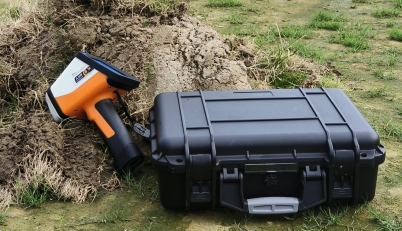
Their ability to provide fast results, non-destructive analysis, portability and versatility make them valuable across a variety of industries. By enabling on-site analysis, XRF handheld scanners eliminate the need for sample transportation and reduce downtime. Their user-friendly operation and comprehensive data management further increase efficiency. As technology continues to advance, we can foresee that XRF handheld scanners will become increasingly efficient and valuable, becoming an important tool in the material analysis process. In summary, the adoption of XRF handheld scanners represents a major advance in materials analysis methods. Their speed, affordability, versatility and accuracy make these devices indispensable in various industries. As technology continues to advance, the use of XRF handheld scanners is expected to become more widespread, further improving efficiency and facilitating the evolution of materials analysis practices.
 Your location: