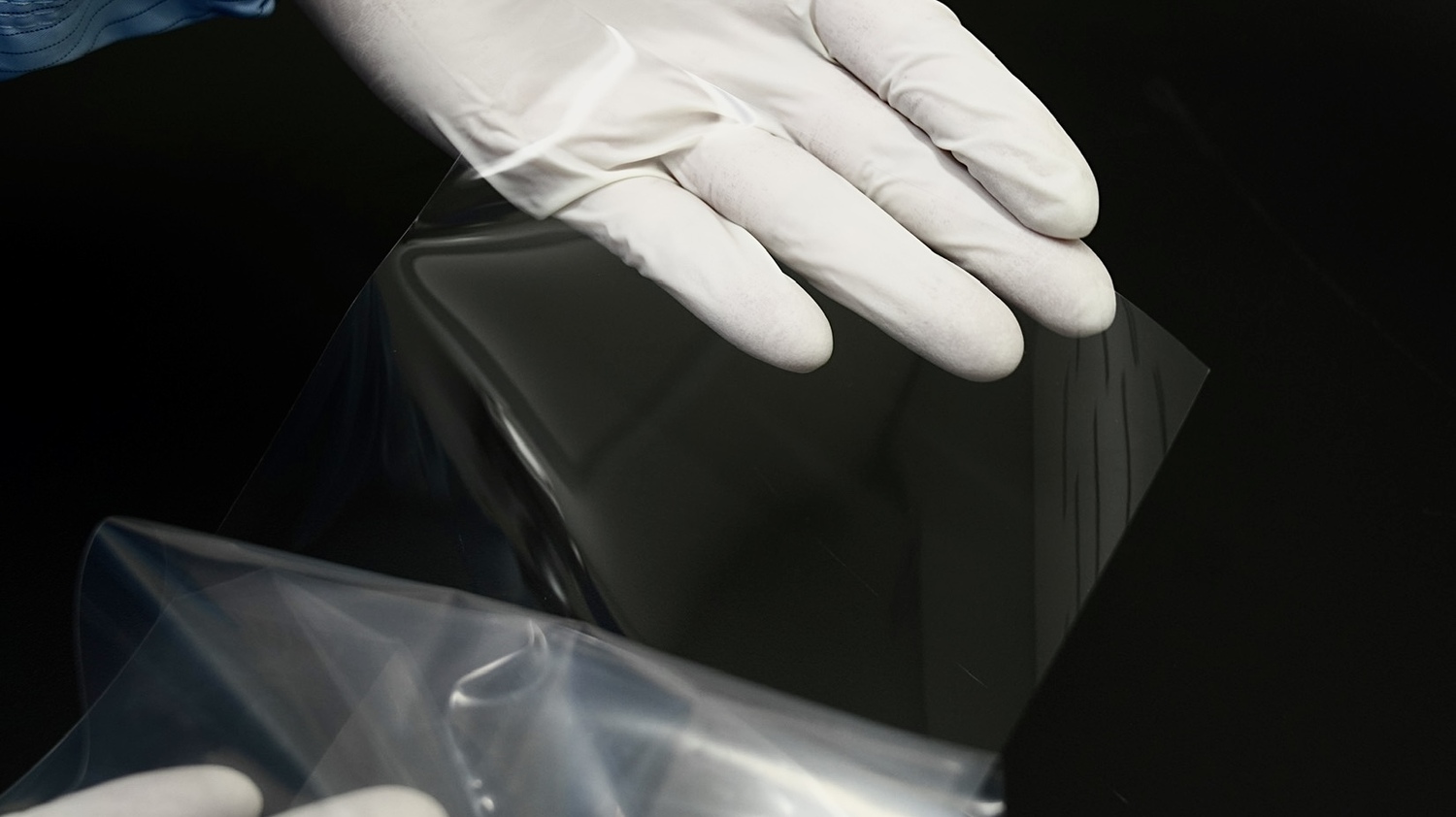

Introduction to Digital Droplet Microfluidic Platform
The digital droplet microfluidic platform consists of three parts: a droplet controller (Figure 1), droplet control software (Figure 2), and a digital microfluidic chip (Figure 3). It can be used for digital droplet microfluidic control and can control a series of unit operations such as droplet transfer, mixing, and splitting on the software operation interface.
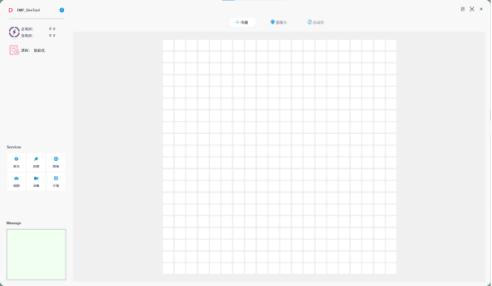
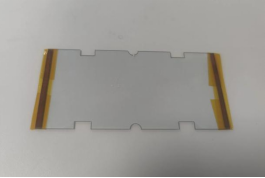
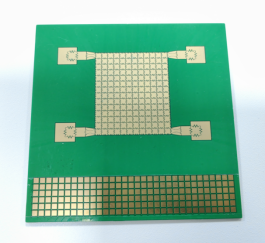
Figure 3. Digital microfluidic chip (left image: ITO glass upper plate; right image: PCB electrode lower plate)
2. The principle of digital droplet microfluidic chip technology
Digital Microfluidics (DMF) is an emerging full range micro droplet manipulation technology that automates the control of discrete droplets based on the principle of dielectric wetting (EWOD). By sequentially energizing the electrodes, basic operations such as transportation, generation, merging, and splitting of liquid droplets of skin lift and above can be achieved. Its advantages lie in low cost, simple processing, high integration level, and programmable control, which are of great significance in sample preparation, reaction, analysis, recovery, and other aspects.
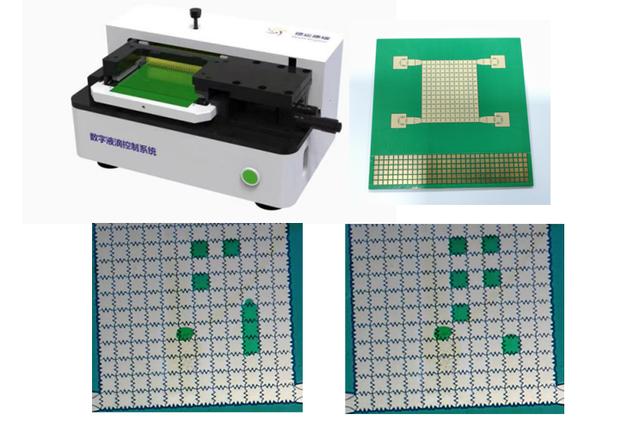
3. The functions of the digital droplet microfluidic platform
After the digital microfluidic chip is connected to the fixture of the micro droplet controller, the electrode is powered on through micro droplet control software. The micro droplet control operations that can be achieved include moving, splitting, merging, and dispensing. The electrode powering process of these four basic droplet control is shown in Figure 4. Based on these four basic operations, customers can achieve functions such as mixing, splitting, merging, and generating micro droplets on the PCB chip (Figure 5).
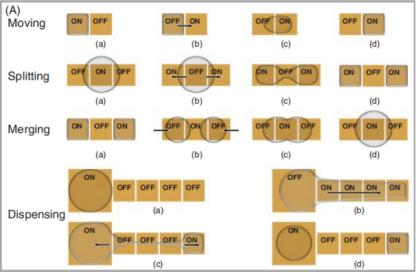
Figure 4 Four basic droplet control methods
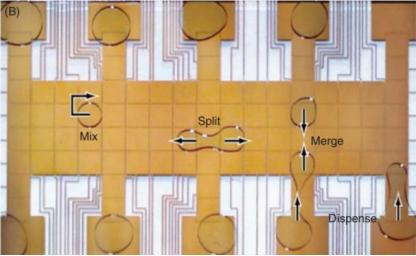
Figure 5 Micro droplet control on PCB chip
4. Application of Digital Droplet Microfluidic Chip Technology
Digital microfluidics, as a novel microscale and full range discrete fluid manipulation technology, is an innovation of traditional microfluidics technology. In response to the shortcomings of traditional microfluidic technology, such as complex control and high technical barriers, digital microfluidics provides a fully automated and programmatic solution for control. This new droplet manipulation method not only provides new technologies and means for research such as chemical synthesis, biological analysis, and drug screening, but also has broad development space in real-time detection, clinical diagnosis, and other aspects.
(1) Cell manipulation and sorting;
(2) Single cell research;
(3) Preparation of trace samples;
(4) Research on Lab-on-a-Chip or automated immune detection.
The above information is sourced from the internet and must be deleted for infringement