

In the field of materials analysis, the advent of portable spectroscopy has revolutionized the way we detect and understand metals. Traditional laboratory-based spectrometers have long been the tool of choice for metallurgists and scientists, but the advent of portable spectrometers has opened up new possibilities, allowing professionals and hobbyists to perform on-the-fly metal analysis in a variety of environments. Traditionally, metal analysis has been performed using laboratory spectrometers, but advances in technology have led to the emergence of portable spectrometers. These handheld devices have revolutionized the way metals are analyzed by enabling instant analysis in various industries such as manufacturing, construction and mining. In this guide, we’ll explore the fascinating field of portable spectroscopy and how it can be unleashed to empower professionals and enthusiasts alike in the field of metal analysis.
What is portable spectroscopy? Spectroscopy essentially involves measuring the intensity of light emitted or absorbed by a substance. Portable spectrometers are compact, handheld devices equipped with advanced optics and electronics that allow users to quickly and easily analyze the elemental composition of metals. These devices utilize principles such as X-ray fluorescence (XRF) or light emission spectroscopy to provide accurate and reliable results. These devices use principles such as X-ray fluorescence (XRF), laser-induced breakdown spectroscopy (LIBS) or optical emission spectroscopy (OES) to determine the elemental composition of metal samples. They are designed to be lightweight, easy to use and produce results quickly, making them ideal for field applications and on-site metal analysis.
Using a portable spectrometer for metal analysis has several advantages. First, these devices provide real-time analysis, allowing for immediate decision-making and on-site quality control. They eliminate the need for sample transportation, reduce the time required for analysis, and increase productivity. Portable spectrometers also reduce reliance on laboratory analysis, saving the time and cost of sending samples to outside laboratories.
Portability: As the name suggests, the main advantage of a portable spectrometer is its portability. Professionals can carry these devices to a variety of places, whether it's a manufacturing facility, a construction site, or even an archaeological site. Portable spectrometers enable professionals to perform metal analysis directly on site or at the point of use. Whether inspecting incoming raw materials, verifying alloy composition, or performing on-site quality control, these devices provide the convenience of instant analysis. They can quickly identify the presence of trace elements, determine alloy grade, and assess material integrity to ensure compliance with industry standards and regulatory requirements.
Time Efficiency: Portable spectrometers provide real-time results, eliminating the time required to transport samples to the laboratory. This instant feedback enables industries to make decisions faster.
Cost-effective: While traditional laboratory spectrometers can be expensive and costly to maintain, portable spectrometers offer a cost-effective alternative. It achieves high return on investment by saving time and resources.

Portable spectrometers are versatile tools that can analyze a wide range of metals and alloys. They can be used to analyze ferrous and non-ferrous metals including steel, aluminum, copper and nickel alloys. These devices have applications in various industries including manufacturing, metal recycling, jewelry and even archaeological research. Where non-destructive testing is required, portable spectrometers provide accurate results without causing damage to the sample.
Quality Control in Manufacturing: Portable spectrometers have become an indispensable tool in manufacturing environments. Engineers and quality control professionals can use these devices to evaluate the composition of metals during production, ensuring the material meets required specifications.
Field exploration and archeology: In fields such as geology and archeology, portable spectrometers become indispensable when laboratory access is limited. Researchers can analyze metal artifacts or geological samples directly in the field to quickly understand the composition and history of the material.
Environmental Monitoring: Portable spectroscopy plays a vital role in environmental monitoring, especially where metal contamination needs to be quickly identified. Whether assessing water quality or analyzing soil composition, these devices provide fast and accurate solutions.
Modern portable spectrometers are equipped with advanced data management capabilities. They store, organize and analyze data, allowing professionals to track and record analysis results. Some devices offer wireless connectivity and integration with cloud-based platforms, facilitating remote access to data and collaboration among team members. This improves data integrity, traceability, and enables the generation of comprehensive quality control reports.
When choosing a portable spectrometer, there are several factors to consider. This includes analytical performance, detection limits, ease of use, battery life and device durability. Professionals should also ensure that the spectrometer is calibrated and meets industry standards for precision and accuracy. Additionally, proper training on the equipment and understanding its limitations are keys to obtaining reliable and meaningful results.
Analysis range: Different spectrometers are suitable for different analysis ranges. Consider the specific elements you need to analyze and make sure the equipment you choose covers them.
Ease of use: Choose a portable spectrometer with a user-friendly interface and simple operation. Training time should be minimized to allow for quick acceptance by field professionals.
Durability: Since portable spectrometers are designed for use in the field, durability is critical. Look for equipment with a rugged construction that can withstand different environments.
Battery Life: Check your spectrometer’s battery life to make sure it meets the needs of your field work. Long-life batteries are essential for uninterrupted analysis.
XRF uses the primary X-rays emitted by the X-ray tube to irradiate the sample, so that the sample is excited to emit characteristic X-ray fluorescence, and then through the X-ray fluorescence energy analysis and intensity measurement, the type and content of the elements in the sample can be quantitatively calculated.
XRF can directly test solid samples, and can perform non-destructive testing on samples that meet the test requirements. At the same time, the test speed is fast and the sensitivity is high. Since the handheld XRF analyzer is more portable, it is more suitable for rapid spot check and quality control of samples.
The performance of the handheld XRF analyzer Terra900 series can fully meet the requirements for rapid onsite check and quality control of denture metal raw materials.
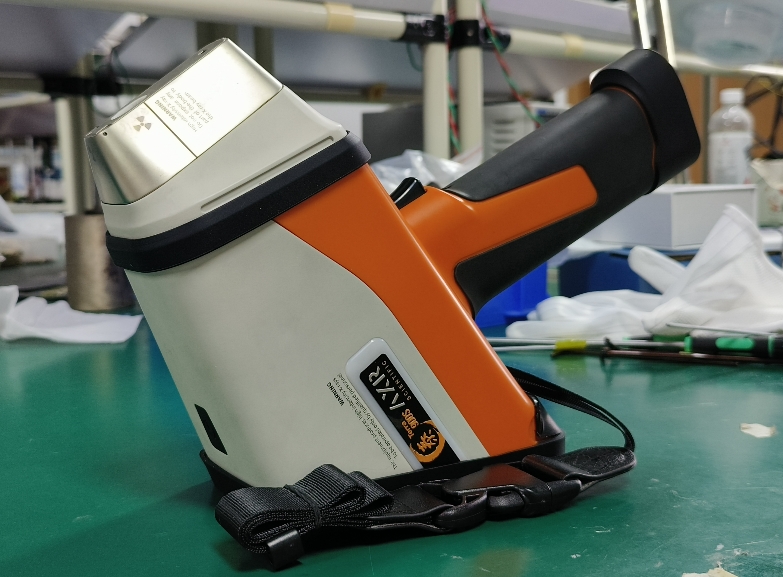
Portable spectroscopy has indeed been unleashed, allowing professionals across industries to perform metal analysis conveniently and efficiently in a variety of environments. Whether ensuring the quality of manufacturing processes, conducting research at archaeological sites, or monitoring environmental conditions, these compact devices have proven to be indispensable tools. As technology advances, we can only expect portable spectroscopy to become even more accessible and versatile, further expanding its growing applications in metal analysis.
 Your location: