Quantum Computing
Quantum computing demands materials that can maintain coherence, stability, and precision at the atomic level. Every interface — from dielectric layers to optical windows — directly influences qubit lifetime, gate fidelity, and system scalability.
Fluorokey’s proprietary Pyflon™ amorphous fluoropolymer is designed to meet these exacting requirements. With an ultra-low dielectric constant (~1.8) and exceptionally low dielectric loss tangent (<10⁻⁴ at GHz frequencies), Pyflon™ enables minimal microwave signal dissipation in superconducting and photonic quantum circuits. Its amorphous, defect-free morphology ensures high uniformity and eliminates parasitic two-level systems (TLS), a major source of decoherence in quantum devices.
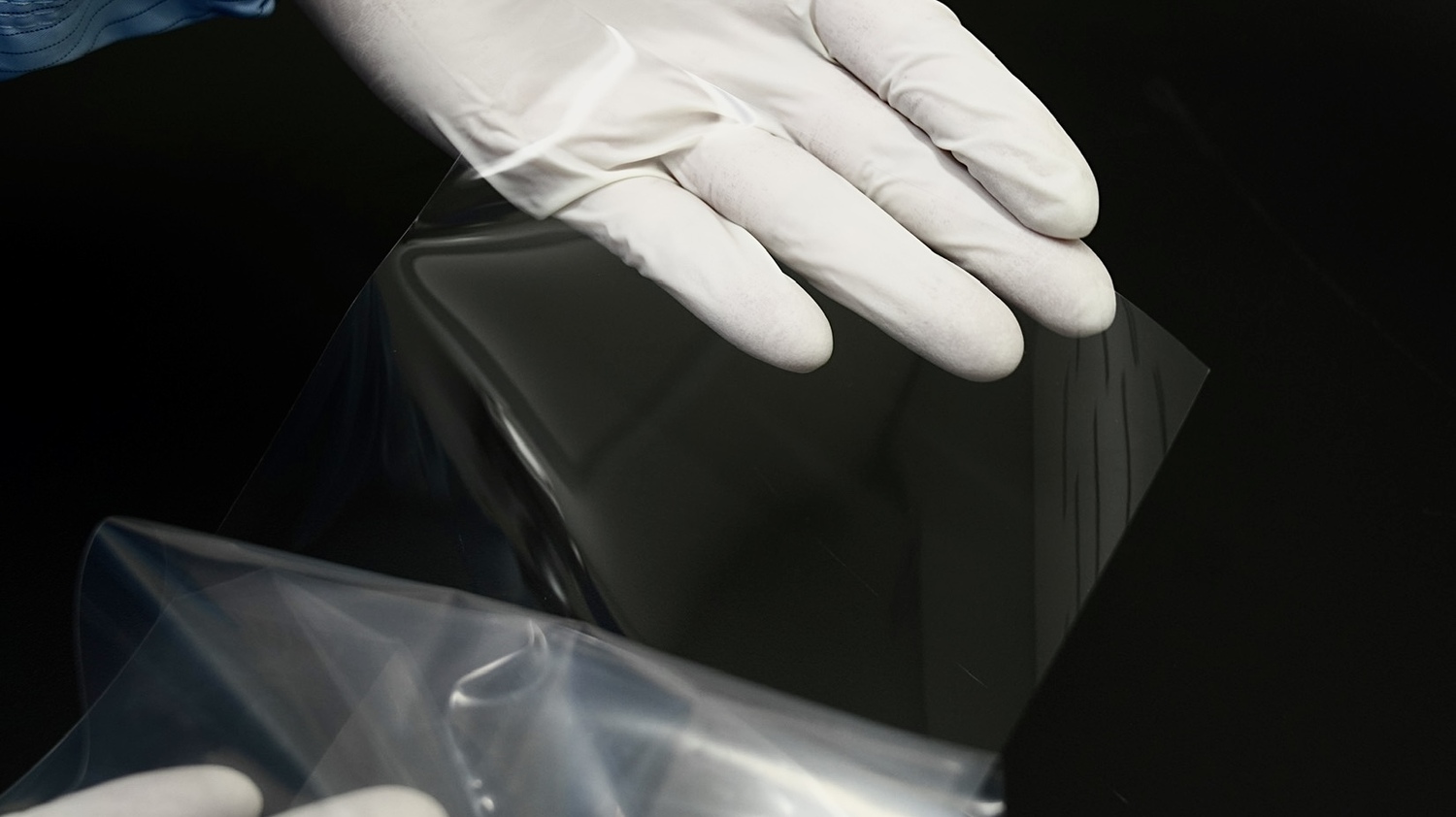
Pyflon™ films exhibit broadband optical transparency (UV–NIR) and excellent cryogenic stability, making them ideal for quantum photonics, vacuum optical windows, and hybrid qubit packaging. The material’s chemical inertness and gas permeability further support ultra-high vacuum (UHV) environments, allowing controlled gas diffusion and low outgassing performance critical for ion-trap and cavity-QED systems.
Through scalable thin-film processing and precise compositional control, Fluorokey is establishing a new materials platform for quantum hardware — one that bridges microwave engineering, photonics, and cryogenic materials science. Our ongoing collaborations explore Pyflon™ integration with superconducting resonators, diamond NV centers, and photonic interposers, aiming to advance stable, manufacturable quantum architectures for the AI-accelerated scientific revolution.